Family First
Daily care is built around familiarity, observation, handling, and the relationship between dogs and the people who know them best.

Canine Care
Every mile on the trail is supported by thousands of thoughtful decisions made long before the race begins. Nutrition, conditioning, veterinary care, recovery, and the bond between musher and dog all work together to support healthy, enthusiastic athletes.
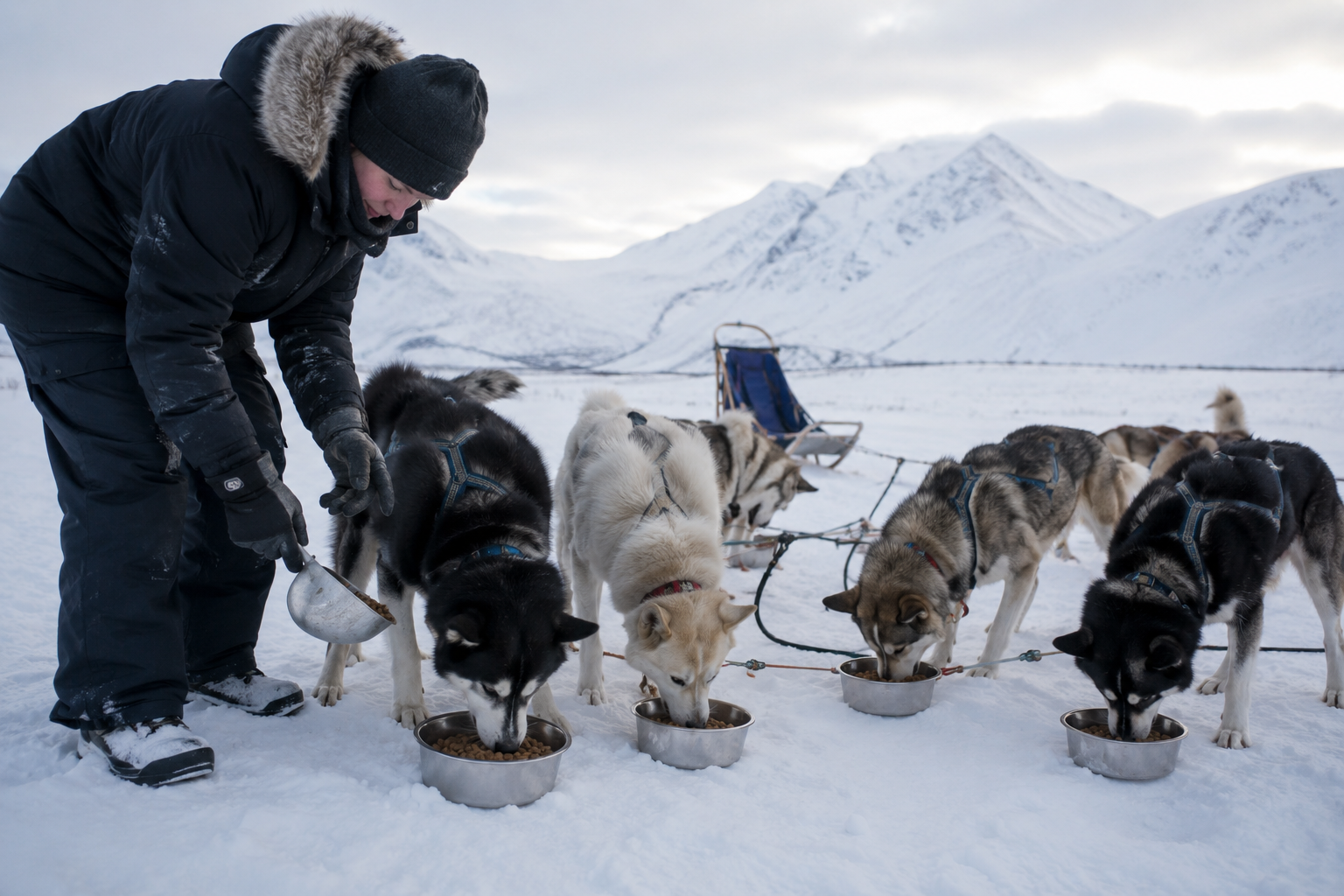
01 · Nutrition
Working sled dogs require carefully balanced nutrition to support strength, stamina, recovery, and resilience in demanding conditions.
Meals can be adjusted for training intensity, temperature, age, body condition, hydration needs, and each dog’s individual response. Nutrition is not treated as a fixed formula; it changes as the dog’s work and environment change.
02 · Veterinary Care
Preventive care includes far more than race-day examinations. Routine observation, physical assessment, paw protection, hydration monitoring, and recovery checks help identify small concerns before they become larger problems.

03 · Conditioning & Recovery
Conditioning develops endurance gradually while preserving enthusiasm, confidence, teamwork, and sound movement.
Workload is balanced with recovery. Rest, sleep, hydration, massage, feeding, and quiet observation are all part of training—not interruptions to it.

04 · Life Beyond Racing
Most of a sled dog’s life happens away from competition. Dogs play, rest, explore, form friendships, learn routines, seek affection, and develop distinct preferences and personalities.
Daily care is built around familiarity, observation, handling, and the relationship between dogs and the people who know them best.
Age, temperament, appetite, confidence, energy, and recovery vary from dog to dog. Care should reflect those differences.
Enthusiasm, engagement, and willingness are meaningful parts of assessing how a dog is responding to work and daily life.
05 · Retirement
Retirement is part of responsible long-term planning.
Retirement plans vary. Many dogs remain with their mushers, continue lighter activity, or move to carefully selected homes suited to their individual needs.
Frequently Asked Questions
Many purpose-bred sled dogs show strong enthusiasm for running, pulling, and working with a team. Individual willingness and behavior should still be observed closely.
Diets vary by workload, climate, age, body condition, and individual response. High-energy work may require adjustments in calories, fat, protein, hydration, and feeding frequency.
Progressive conditioning, routine examination, paw care, proper equipment, close observation, rest, and recovery planning all contribute to prevention.
Care is not limited to emergencies. Preventive examinations, vaccination planning, ongoing monitoring, and race or event checks can all be part of a broader health program.
Retirement plans vary. Many dogs remain with their mushers, continue lighter activity, or move to carefully selected homes suited to their individual needs.
View retired dogs available for adoption →